What percentage of workers are thriving vs. struggling? (Part one of the series, "Who is being left behind?")
Background:
In the RRC’s study, “Who Is Being Left Behind,” 2,004 workers aged 21 to 75 were surveyed online in Q1 2021. They were asked about various financial topics related to their long-term and short-term assets, as well as debt, financial wellness, and financial health questions. Advanced analytics were used to create segments.
Findings:
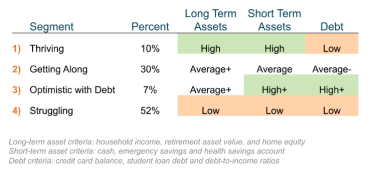
Four segments emerged from household balance sheet data, including:
1. Thriving (10%): High long-term assets, high short-term assets, and low debt. This group is relatively older, on average, and three-quarters are married.
2. Getting Along (30%): Above-average assets, average short-term assets, and below average debt. This segment is close to the average age of those surveyed, and also more likely to be married.
3. Optimistic with Debt (7%): Above-average assets, very high short-term assets, and very high debt. They are younger and also likely to be married with two or more children.
4. Struggling (52%): Low long-term assets, low short-term assets, and low debt. This large group is also younger; however, nearly two-thirds are unmarried and more women fall into this segment.
Bottom line:
This analysis illustrates the heterogenous financial situations of surveyed workers. More than half are struggling with their financial security. Almost a third of the surveyed population has greater financial security with slightly more than average assets and slightly less than average debt. Only one–in ten are truly thriving with higher amounts of long and short-term assets and low amount of debt.
In future RRC Research Minutes, we will explore diversity and equity nuances, including the intersection of race and gender.