What is standing between participants and better retirement outcomes?
Guest Contributor: Jeri Savage, Lead Retirement Strategist, MFS
Background:
The 2026 MFS Global Retirement Survey gathered insights from more than 4,000 workplace retirement plan members and retirees across six countries to better understand what drives retirement confidence, saving behavior, and advice preferences. Across the findings, three themes emerged: saving for retirement remains difficult, investment understanding varies, and personalized advice is increasingly important.
Findings:
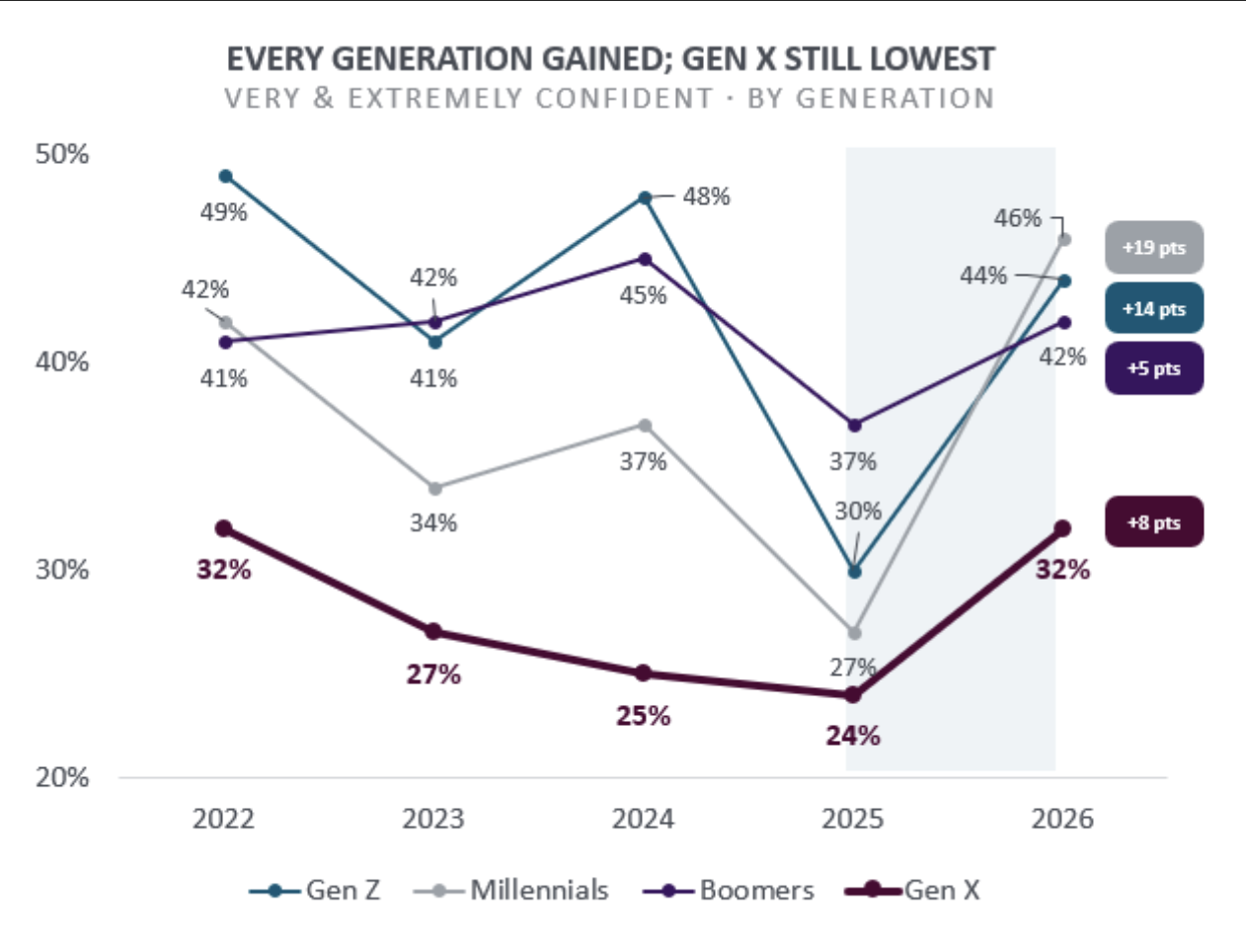
The survey found that retirement confidence in the US improved in 2026, with gains across both genders and every generation. However, important gaps remain. Women continue to report lower levels of retirement confidence than men, and Gen X participants remain the least confident generation despite recent improvement.
Exhibit 1: Improving Retirement Confidence

Against that backdrop, three key themes emerged. First, financial pressures continue to compete with retirement saving. While retirement confidence improved, 75% of participants reported that competing financial obligations make it difficult to save adequately for retirement, highlighting the challenge of balancing long-term goals with immediate financial needs. These pressures are not experienced equally, with meaningful differences across generations and genders. Younger participants, for example, are more likely to cite competing financial priorities, while women often face distinct challenges related to caregiving responsibilities and career interruptions.
Second, using investments is not the same as understanding them. Participants rely on a wide range of resources to make retirement and investment decisions, yet no single source reaches even half of participants. Advice preferences and information sources differ substantially by age cohort, ranging from greater use of social media and AI-driven tools among younger participants to stronger reliance on financial advisors among older generations.
Third, retirement is personal and advice is becoming more valuable. Differences by generation, gender and life stage reinforce that retirement is not a one-size-fits-all experience. Participants bring different goals, concerns, and preferences to the retirement journey, increasing the importance of providing guidance that is relevant to their unique circumstances.
Bottom Line:
Participants are more confident than they were a year ago, but successful retirement outcomes increasingly depend on helping individuals navigate complexity, make informed decisions, and access advice when needed. The survey also highlights meaningful differences across generations and genders, suggesting that participant needs, preferences, and financial challenges are not universal. Understanding those differences may help plan sponsors design retirement programs, communications, and support strategies that better align with the diverse needs of today's workforce.
For survey methodology, please click here.
---
Insights shared by guest contributors are their own and do not represent the views of DCIIA or the RRC. The opinions voiced in this material are for general information only and are not intended to provide specific advice or recommendations for any individual.