What insights do our worker focus groups provide about financial wellness? (Part Two)
Background:
As part of the ongoing AARP financial wellness study, the RRC conducted a series of focus groups with diverse groups of workers that participate in a workplace defined contribution retirement plan. This week’s Research Minute expands on the survey analysis around engagement, communications, and incentives.
Findings:
While participants showed diverse preferences for when and how to engage with a financial wellness program (daytime or evening, work or home), several clear findings emerged:
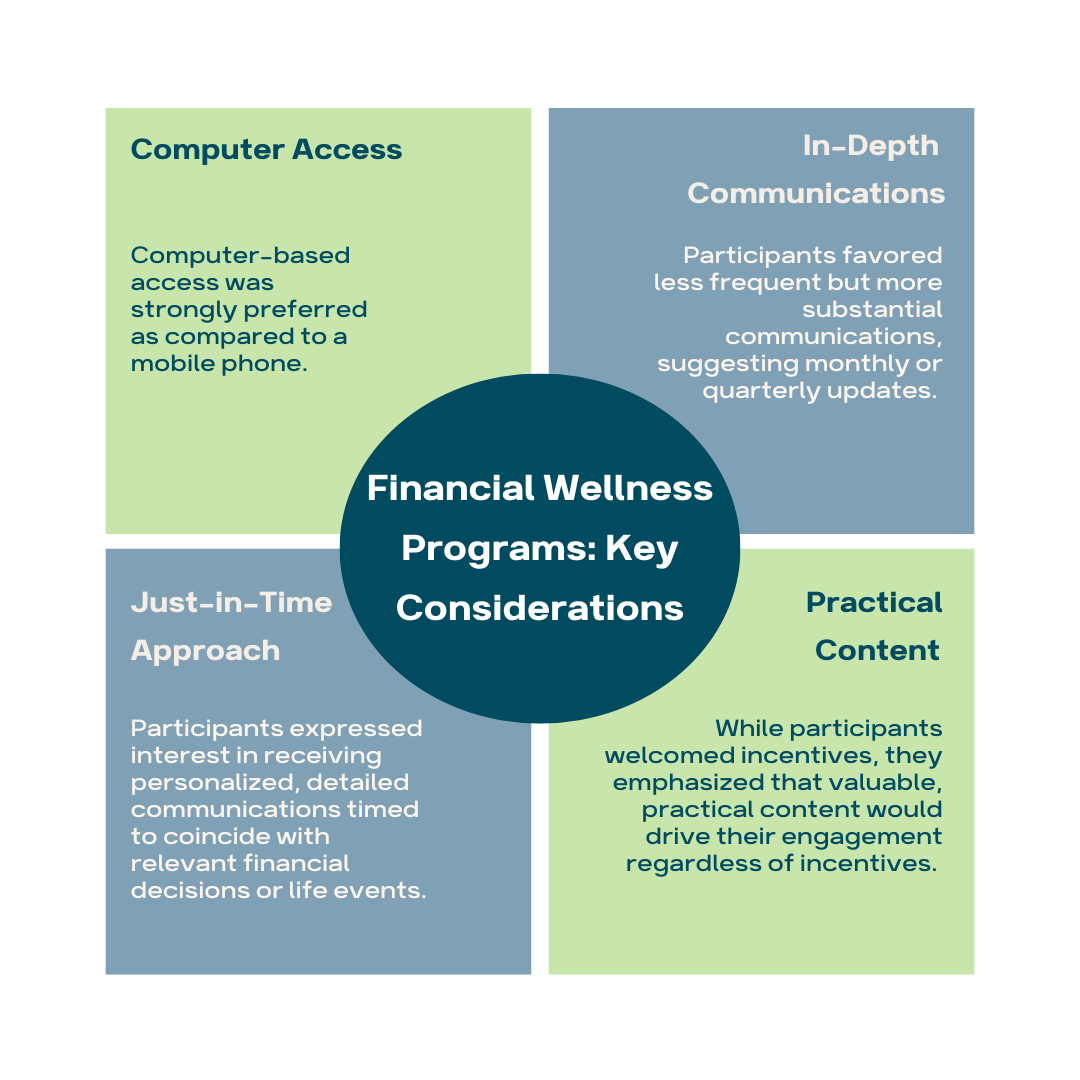
Computer-based access was strongly preferred, as compared to a mobile phone, with particular interest in adding a live chat.
Participants favored less frequent but more in-depth communications, suggesting monthly or quarterly updates rather than more frequent emails. While divided between text and email preferences, participants suggested several communication approaches such as company-wide financial wellness meetings, colleague-to-colleague information sharing, video content embedded in emails, and clear pathways for asking financial questions.
Participants expressed interest in receiving personalized, detailed communications timed to coincide with relevant financial decisions or life events, such as getting married or death of a spouse. This "just-in-time" approach, combined with in-depth content, appears more valuable than general content.
While participants welcomed incentives, they emphasized that valuable, practical content would drive their engagement regardless of incentives.
Bottom line:
The heterogeneity in responses regarding usage times and preferred communication methods suggests that financial wellness program administrators will need diverse strategies to foster program engagement. While incentives may drive initial participation, the perceived value of the program appears to have a stronger influence. Developing a high-value, practical financial wellness program paired with a high-touch, less frequent communication approach could prove effective. Strategies worth exploring include word-of-mouth promotion through colleagues and employee resource groups (ERGs), leveraging video in emails, prominently displayed contact information for questions and live chat, and personalized, in-depth communications tailored to significant life events.