What are Americans’ views on the impact of extreme weather on retirement preparedness?
Background:
In 2024, the U.S. experienced 27 distinct weather and climate disasters that cost $1 billion or more in damages, amounting to a total of $182.7 billion. The 2025 Annual Retirement Study by the Allianz Center for the Future of Retirement, part of Allianz Life Insurance Company of North America, recently explored Americans' perspectives on how extreme weather events influence their financial planning.
Findings:
Nearly 6 in 10 Americans (58%) express concerns about rising costs, potential financial losses, and the effects of extreme weather events or natural disasters, and a quarter of Americans rank this in their top 3 risks to retirement income, above needing to pay down debt and becoming a caregiver.
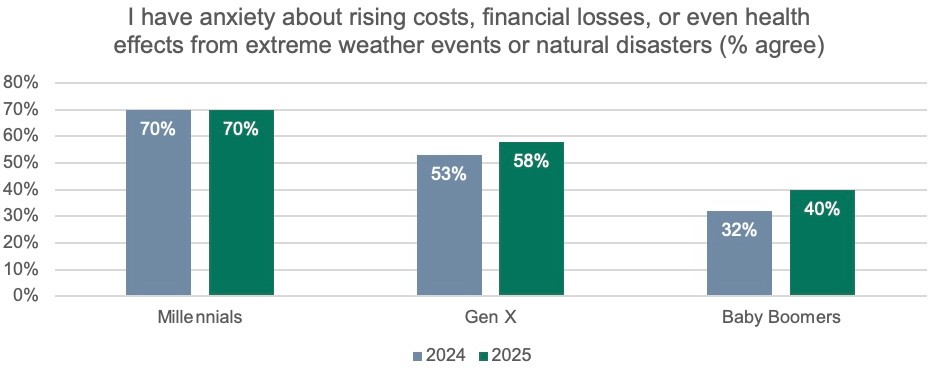
This anxiety is especially prevalent among Millennials, with 70% expressing concerns about the financial implications and effects of extreme weather events. Additionally, both Gen X and Baby Boomers have shown increased agreement with these concerns from 2024 to 2025.
Nearly three in ten (29%) Millennials rank these risks in their top three retirement concerns, surpassing worries about healthcare expenses in retirement (26%), significant market downturns reducing retirement savings (24%), outliving assets (23%), debt (23%), and becoming a caregiver (20%).
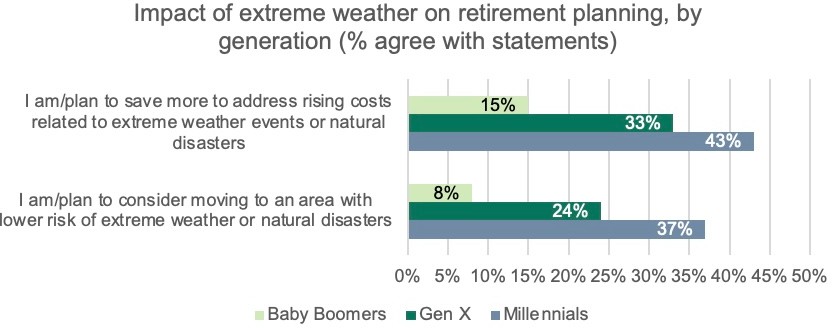
This heightened awareness among Millennials is reflected in their long-term financial plans, with 37% considering relocating to areas with lower risks of extreme weather and 43% saving to help address rising costs related to extreme weather events. Although slightly trailing behind Millennials, nearly a quarter of Gen X (24%) are also contemplating relocation, and a third (33%) are increasing their savings to mitigate the impacts of extreme weather.
Bottom Line:
Despite growing concerns, especially among younger generations, about the financial implications of extreme weather, proactive planning remains limited, with only 15% accounting for the potential impact of extreme weather or natural disasters into their retirement plans. To prepare individuals, it would be beneficial to assist them in planning for rising energy and insurance costs, provide education and support for establishing emergency savings plans, and curate resources to help them both proactively plan for and respond to the effects of disasters.
----
Insights shared by guest contributors are their own and do not represent the views of DCIIA or the RRC. The opinions voiced in this material are for general information only and are not intended to provide specific advice or recommendations for any individual.
Sources:
NOAA National Centers for Environmental Information (NCEI) U.S. Billion-Dollar Weather and Climate Disasters (2025)
The Allianz 2025 Annual Retirement Study, conducted in January/February 2025 with a nationally representative sample of 1,000 Respondents age 25+ with an annual household income of $50k+ (single) / $75k+ (married/partnered) OR investable assets of $150k+.